Quick answer
To write a CV in Sri Lanka, use a clear layout with your contact details, a short professional profile, relevant skills, experience or projects, and qualifications. Describe what you actually did with specific examples, keep early-career CVs to one or two focused pages, tailor the CV to each role and send a proofread, text-based PDF unless the employer requests another format.
Key takeaways
- A strong CV needs accurate information and a clear structure, not an elaborate design.
- Replace generic profile statements with specific skills and the role you are seeking.
- Describe your contribution the action, the task and the outcome or scope.
- Without paid work, use education, volunteering, projects or family-business experience.
- Keep a master CV and tailor it for each type of role.
In this article
What makes a strong CV?
Your CV is often the first information an employer receives about you. It should help them understand your background, relevant skills and suitability for the position without having to search through unnecessary details.
A strong CV does not need an elaborate design. It needs accurate information, a clear structure and examples that relate to the job you want.
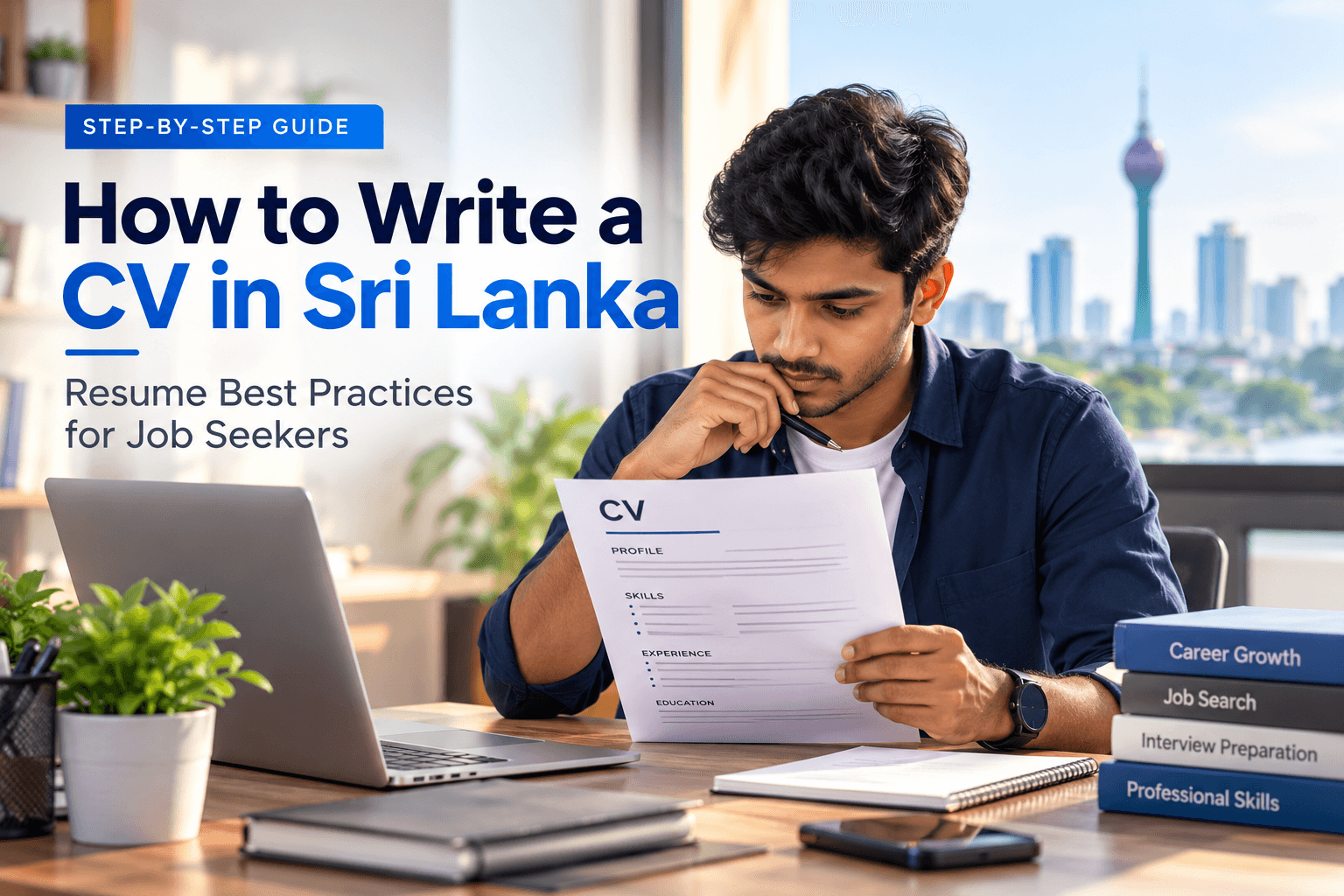
Whether you are preparing your first CV after A/Ls or updating it for your next career move, these resume best practices can help you present yourself more effectively.
Choose a Clear and Practical CV Format
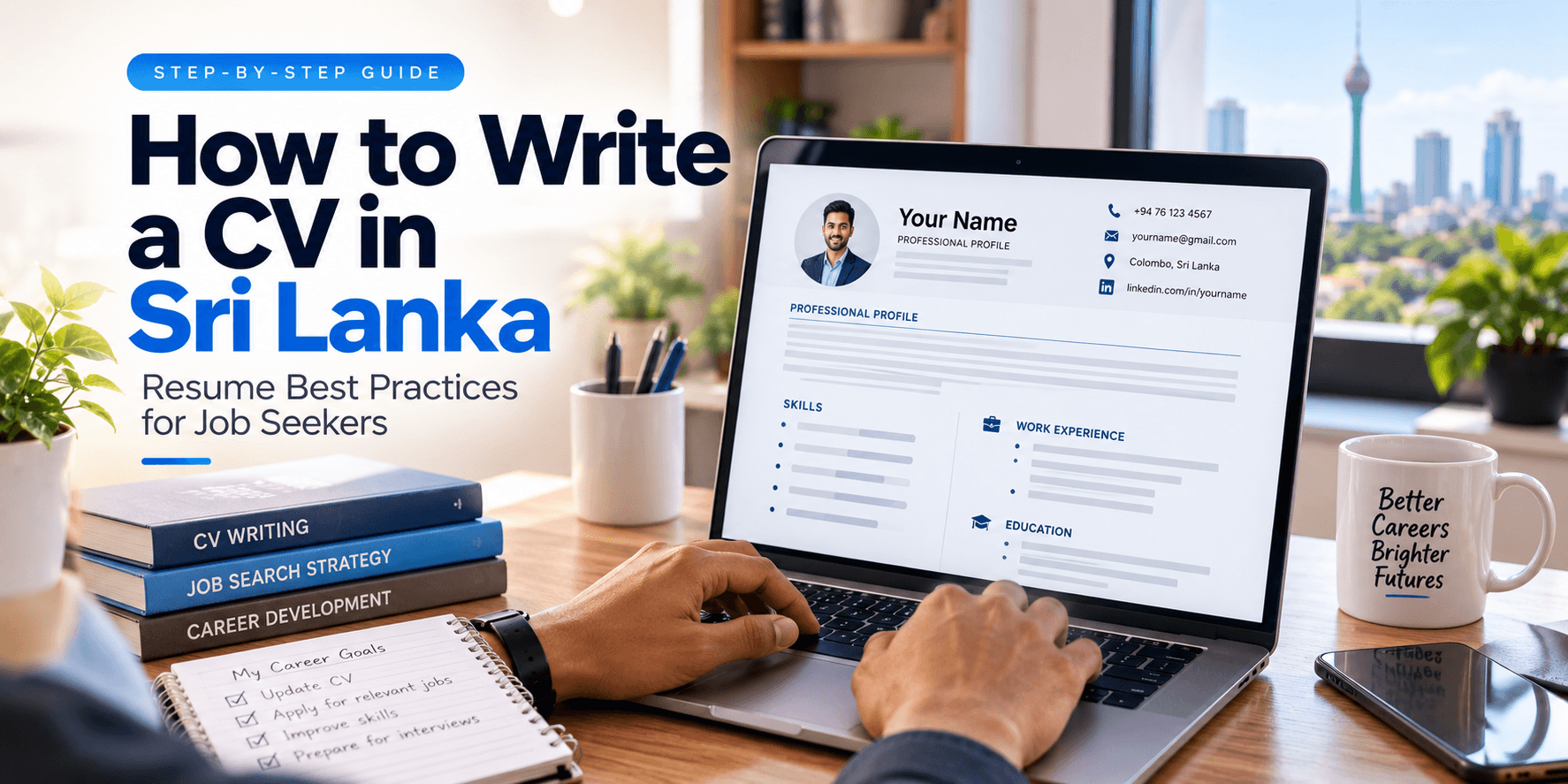
Use a layout that is easy to read on a screen and in print. Clear headings, consistent spacing and a readable font help employers find information quickly.
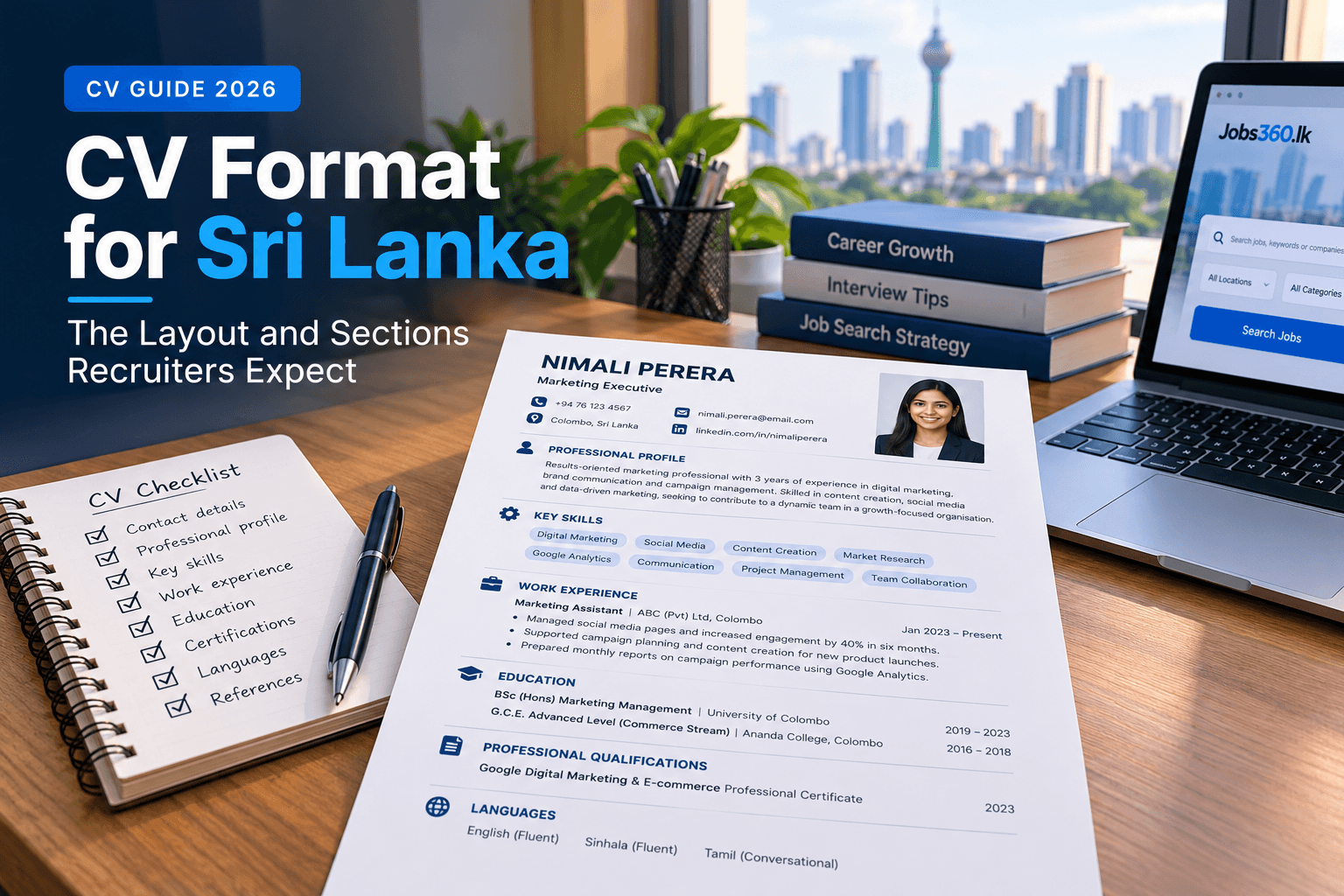
A useful structure includes:
- Name and contact information.
- Professional profile.
- Relevant skills.
- Employment, internships or projects.
- Education and professional qualifications.
- Additional relevant information.
- Referees, when requested.
The order can change depending on your experience. A school leaver may place education near the top, while an experienced applicant should usually give greater attention to recent employment.
For many early-career applicants, one or two focused pages are a sensible target. Include information that supports your application rather than adding content simply to make the CV longer.
For a detailed section-by-section layout, see our guide to the CV format for Sri Lanka.
Include Accurate Contact Details
Provide your name, current phone number, professional email address and town or district. Include a LinkedIn or portfolio link when it adds useful evidence about your work.
Check your contact details carefully. A typing error in your phone number or email address can prevent an employer from reaching you.
Avoid unnecessary sensitive information such as bank details or identity document numbers. Follow the application instructions if the employer requests additional information through an appropriate process.
Write a Professional Profile That Says Something Useful
Your professional profile should briefly explain who you are, what relevant skills you bring and the type of role you are seeking.
Avoid statements that could apply to almost anyone, such as "hardworking individual looking for a challenging opportunity."
A more useful example for a school leaver would be:
A/L Commerce school leaver seeking a trainee administration position. Comfortable using Microsoft Word and Excel, with experience maintaining records and coordinating school activities. Interested in developing office administration and customer service skills.
For someone with experience, the profile should highlight relevant responsibilities and strengths.
Use examples as a guide to structure, and replace every detail with information that accurately reflects your background.
Describe Experience with Specific Examples
Listing a job title tells an employer where you worked. Describing your contribution helps them understand what you can do.
Instead of writing:
Responsible for customer service.
You could write:
Responded to customer enquiries by phone and email, recorded unresolved issues and coordinated follow-ups with the service team.
A useful approach is to explain the action you took, the task involved and the outcome or scope of the work.
Include numbers only when you can verify them. You do not need an impressive percentage in every bullet point. A clear, accurate description is more useful than an exaggerated achievement.
Build a Strong CV Without Formal Work Experience
If you have not held a paid job, include relevant experience from education, volunteering, internships or personal projects.
For example, you could describe:
- A university assignment in which you analysed information.
- A school event you helped organise.
- A software application or design portfolio you created.
- Customer service or record keeping in a family business.
- Responsibilities in a club or community organisation.
Explain your own contribution. If you worked in a group, make it clear which tasks you handled.
A first-job CV should show that you can learn, take responsibility and apply relevant skills.
Present Qualifications Clearly
Include the qualification, institution and completion date. If you are still studying, clearly state that the qualification is in progress.
School leavers can include relevant O/L and A/L details. Applicants with more experience can give greater attention to qualifications related to their current career direction.
If you are completing a professional qualification, explain the stage you have reached. Avoid wording that suggests you have completed a qualification when you are still studying towards it.
Tailor Your CV to Each Type of Role
Keep a master CV containing your experience and achievements. Then adapt it for the vacancy you are applying for.
Read the advertisement and identify the main requirements. Make relevant skills and examples easy to find.
For an administration role, you might highlight record keeping, scheduling and document preparation. For a customer service role, you might give more attention to communication, problem-solving and handling enquiries.
Use the employer's terminology naturally where it accurately describes your experience. Do not add skills simply because they appear in the advertisement.
Check the Final File Before Sending
Use the file format requested by the employer. When no format is specified, a text-based PDF can help preserve the layout.
Open the final file and check that the text is readable, the links work and nothing has moved out of place. Use a clear filename, such as:
Nimal-Perera-Accounts-Assistant-CV.pdf
Proofread names, dates, spelling and contact information. Ask someone you trust to review the CV for clarity.
Put Your CV to Work with Jobs360.lk
A well-prepared CV makes it easier to explain your strengths and apply with confidence.
Browse jobs on Jobs360.lk, select a suitable opportunity and tailor your CV to show how your experience matches the role.
Frequently asked questions
How long should a CV be in Sri Lanka?
For many early-career applicants, one or two focused pages are a sensible target. Include information that supports your application rather than adding content to make the CV longer.
How do I write a CV with no work experience?
Include relevant experience from education, volunteering, internships or personal projects such as a university assignment, a school event you organised, a portfolio you created or record keeping in a family business and explain your own contribution.
What should I write in a CV professional profile?
Briefly explain who you are, the relevant skills you bring and the type of role you are seeking. Avoid generic statements such as "hardworking individual looking for a challenging opportunity."
Should I send my CV as a PDF?
Use the file format the employer requests. When no format is specified, a text-based PDF helps preserve the layout. Use a clear filename such as Nimal-Perera-Accounts-Assistant-CV.pdf.
Should I include my NIC number or bank details on my CV?
No. Avoid unnecessary sensitive information such as bank details or identity document numbers, and follow the employer's instructions if they request additional information through an appropriate process.

Written by
Jobs360.lk Editorial Team
Jobs360.lk is an AI-powered recruitment platform connecting job seekers and employers across Sri Lanka. Our team shares practical guidance on job searching, CVs, interviews and career growth.
About Jobs360.lkYour CV is ready find the right role
Browse vacancies from Sri Lankan employers and tailor your CV to each opportunity.
Browse Jobs