Quick answer
To prepare for a job interview in Sri Lanka, re-read the job advert and match your experience to each requirement, research the employer, prepare a focused "Tell me about yourself" answer, support your answers with STAR-method examples, think through salary and availability, plan the interview day, and prepare questions to ask at the end.
Key takeaways
- Prepare around the actual role link each requirement to an example from your background.
- Research the employer, but avoid making claims you have not checked.
- Use the STAR method (Situation, Task, Action, Result) to support your answers.
- Clarify whether a salary figure is monthly gross pay and what allowances are included.
- Ask questions at the end ofan interview also helps you evaluate the opportunity.
In this article
Why interview preparation matters
Receiving an interview invitation is an encouraging step in your job search. It means the employer wants to learn more about your experience, skills and suitability for the role.
However, a strong application does not remove the need to prepare. During an interview, you must explain your background clearly, support your answers with examples and understand whether the opportunity is right for you.
These interview preparation tips can help Sri Lankan school leavers, graduates and experienced professionals approach their next interview with greater confidence.
Understand the Role Before Preparing Answers
Start by reading the job advertisement again. Identify the main duties, required skills and qualifications.
Ask yourself which parts of your background relate to each requirement. If the role involves customer communication, prepare an example of helping someone resolve a problem. If it requires organisation, think about a task you planned and completed successfully.
You should also identify anything that needs clarification, such as shift arrangements, travel requirements or the balance between office and field work.
Preparing around the actual role helps you give relevant answers.
Research the Employer
Review the employer's website and learn about its products, services and customers. Understand what the organisation does and why the position interests you.
You do not need to memorise every company detail. Focus on information that helps you explain your interest in the work.
For example, a candidate applying to a hotel could think about their interest in guest service. An applicant to a software company could explain how the role connects with their technical projects and learning goals.
Avoid making claims about the company that you have not checked.
Prepare a Focused Introduction
"Tell me about yourself" is an opportunity to introduce the information most relevant to the position.
A useful answer covers your current background, relevant experience and reason for applying.
For example:
I recently completed a business management degree. During my final-year project, I helped coordinate our team's schedule and prepare the presentation. I enjoy organising work and communicating with people, and I am interested in developing those skills in a trainee operations role.
Keep the introduction focused. You do not need to explain your entire personal history.
Practise speaking naturally rather than memorising every word.
Use Examples to Support Your Answers
Statements such as "I am a good team player" become more convincing when you explain a situation in which you demonstrated that skill.
The STAR method provides a useful structure:
- Situation: Explain the context.
- Task: Describe your responsibility.
- Action: Explain what you did.
- Result: Describe the outcome and what you learned.
For example, you could discuss a university assignment that was falling behind schedule. Explain how you helped organise the remaining tasks, communicated with the team and contributed to completing the work.
Applicants without employment experience can use examples from school, volunteering, sports, projects or family-business responsibilities.
Prepare for Common Interview Questions
Why do you want this job?
Explain what interests you about the responsibilities and how your background relates to them. Show that you understand the role rather than focusing only on needing employment.
What are your strengths?
Choose a strength relevant to the position and support it with a specific example. Organisation, attention to detail or communication can be useful answers when you can demonstrate them.
What would you like to improve?
Identify a genuine development area and explain the action you are taking. For example, you might be improving presentation skills through regular practice and feedback.
Why are you leaving your current position?
Keep your answer professional. Explain the responsibilities, learning opportunities or career direction you are seeking without criticising your employer or colleagues.
For more sample answers, read our list of common job interview questions and answers in Sri Lanka.
Prepare for Salary and Availability Discussions
Think about your expectations before the interview. Consider the responsibilities, your relevant experience and the practical costs associated with the role.
If the salary range has not been shared, you can ask:
Could you explain the budgeted salary range and the overall package for this position?
Clarify whether the figure discussed is monthly gross pay and whether allowances or performance-based payments are included.
Be honest about your notice period and availability. If the position involves shifts, weekend work or travel, explain any limitations before accepting an offer.
Plan the Interview Day Carefully
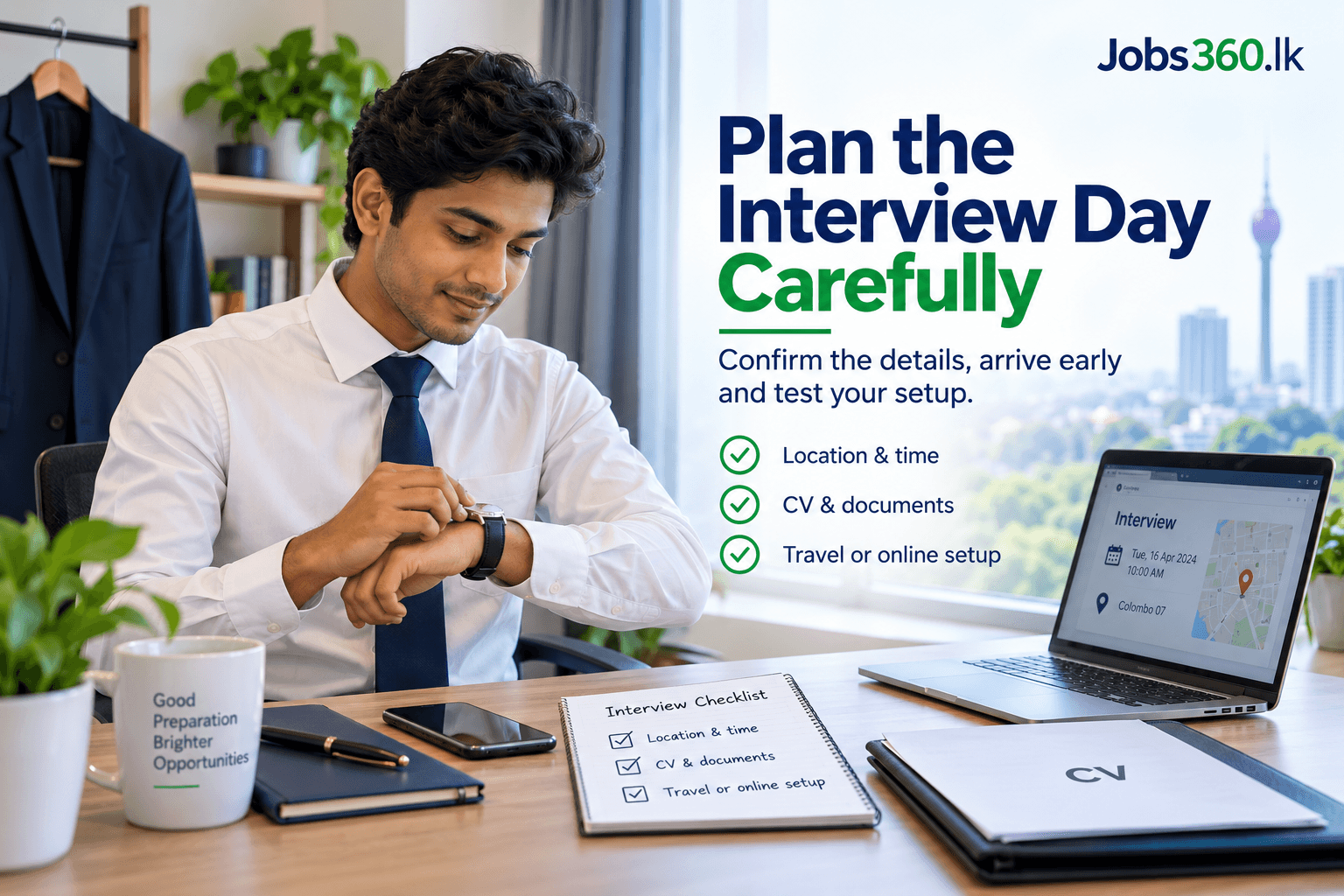
For an in-person interview, confirm the location, time, contact person and documents requested.
Allow extra travel time, particularly if you are travelling into Colombo or visiting an unfamiliar area. Aim to arrive around 10–15 minutes early.
Choose neat clothing appropriate to the role and workplace. Keep your phone silent and bring an accessible copy of your CV.
For an online interview, test your camera, microphone and internet connection. Charge your device, choose a quiet space and keep a contact number available in case of technical problems.

Communicate Clearly During the Interview
Listen to the whole question before answering. If something is unclear, politely ask the interviewer to repeat or explain it.
Use straightforward language and avoid giving long answers that move away from the topic.
If you do not know an answer, say so honestly. You can explain what you do know and how you would approach finding a solution.
Where the interview language is unclear, ask the recruiter beforehand so you can prepare appropriately.
Ask Questions Before You Finish
An interview also helps you evaluate the opportunity.
You could ask:
- What would you expect me to achieve during the first three months?
- What training or support is available?
- How is performance assessed?
- What are the next steps in the recruitment process?
These questions can help you understand the work more clearly.
Find Your Next Opportunity with Jobs360.lk
After each interview, note the questions you found difficult and improve your answers for the next one.
Explore jobs on Jobs360.lk and apply for opportunities that match your skills, interests and career goals.
Frequently asked questions
How do I prepare for a job interview in Sri Lanka?
Re-read the job advert, link each requirement to an example from your background, research the employer, prepare a focused introduction, practise STAR-method examples, think about salary and availability, and plan your travel or online setup in advance.
How should I answer "Tell me about yourself"?
Cover your current background, your most relevant experience and your reason for applying. Keep it focused on the position and practise speaking naturally rather than memorising every word.
What is the STAR method?
STAR stands for Situation, Task, Action and Result. Explain the context, your responsibility, what you did, and the outcome and what you learned.
How do I ask about salary in an interview?
If the salary range has not been shared, you can ask the interviewer to explain the budgeted salary range and the overall package. Clarify whether the figure is monthly gross pay and whether allowances or performance-based payments are included.
What questions should I ask at the end of an interview?
Ask what you would be expected to achieve in the first three months, what training or support is available, how performance is assessed and what the next steps in the recruitment process are.

Written by
Jobs360.lk Editorial Team
Jobs360.lk is an AI-powered recruitment platform connecting job seekers and employers across Sri Lanka. Our team shares practical guidance on job searching, CVs, interviews and career growth.
About Jobs360.lkReady for your next interview?
Find opportunities that match your skills, interests and career goals.
Explore Jobs