Quick answer
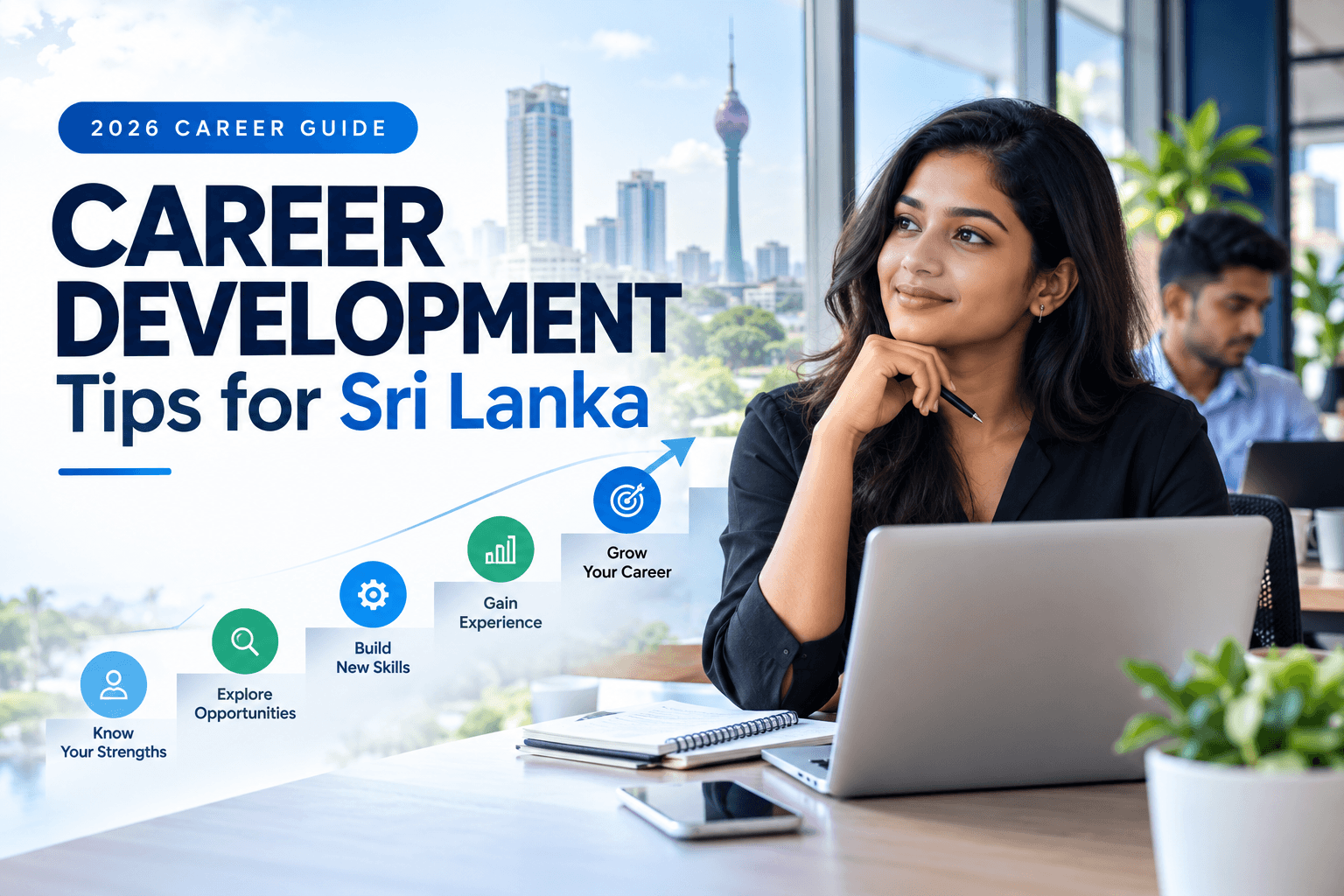
To develop your career in Sri Lanka, identify your strengths and interests, research what your preferred jobs actually require, build skills you can demonstrate through small projects, gain experience through internships or trainee roles, improve your communication, and follow a simple 90-day plan that ends with tailored job applications.
Key takeaways
- Write down the tasks you enjoy, the skills you can demonstrate and the areas you want to improve.
- Read several job adverts for your target role and note the skills that appear repeatedly.
- Small, practical projects prove your skills better than collecting certificates.
- Internships, trainee roles and volunteering all build experience describe your contribution accurately.
- A 90-day plan turns career goals into weekly actions.
In this article
Why career development matters
Building a successful career takes more than finding your first job or completing another qualification. It involves understanding your strengths, choosing a direction and developing skills that help you take on new responsibilities.
Whether you are a school leaver, university graduate or working professional, a clear career development plan can help you make better decisions. Instead of applying for every vacancy you see, you can focus on opportunities that match your abilities, interests and long-term goals.
Here are practical career development tips for job seekers in Sri Lanka.
Understand Your Strengths and Interests
Before deciding which jobs to apply for, take time to understand the type of work you enjoy and the tasks you perform well.
Do you enjoy communicating with people, working with numbers, solving technical problems or organising activities? Your answers can help you identify suitable career paths.
For example, someone who enjoys working with numbers and maintaining accurate records could explore accounting or finance roles. A person who enjoys helping customers and explaining products could consider customer service, sales or hospitality.
Write down three things:
- Tasks you enjoy doing.
- Skills you can demonstrate.
- Areas you would like to improve.
You do not need to choose your entire future immediately. Start by identifying one or two career directions worth exploring.
Research the Requirements of Your Preferred Jobs
A job title alone does not explain what a role involves. Two companies advertising an "administration executive" position may expect different qualifications, responsibilities and experience.
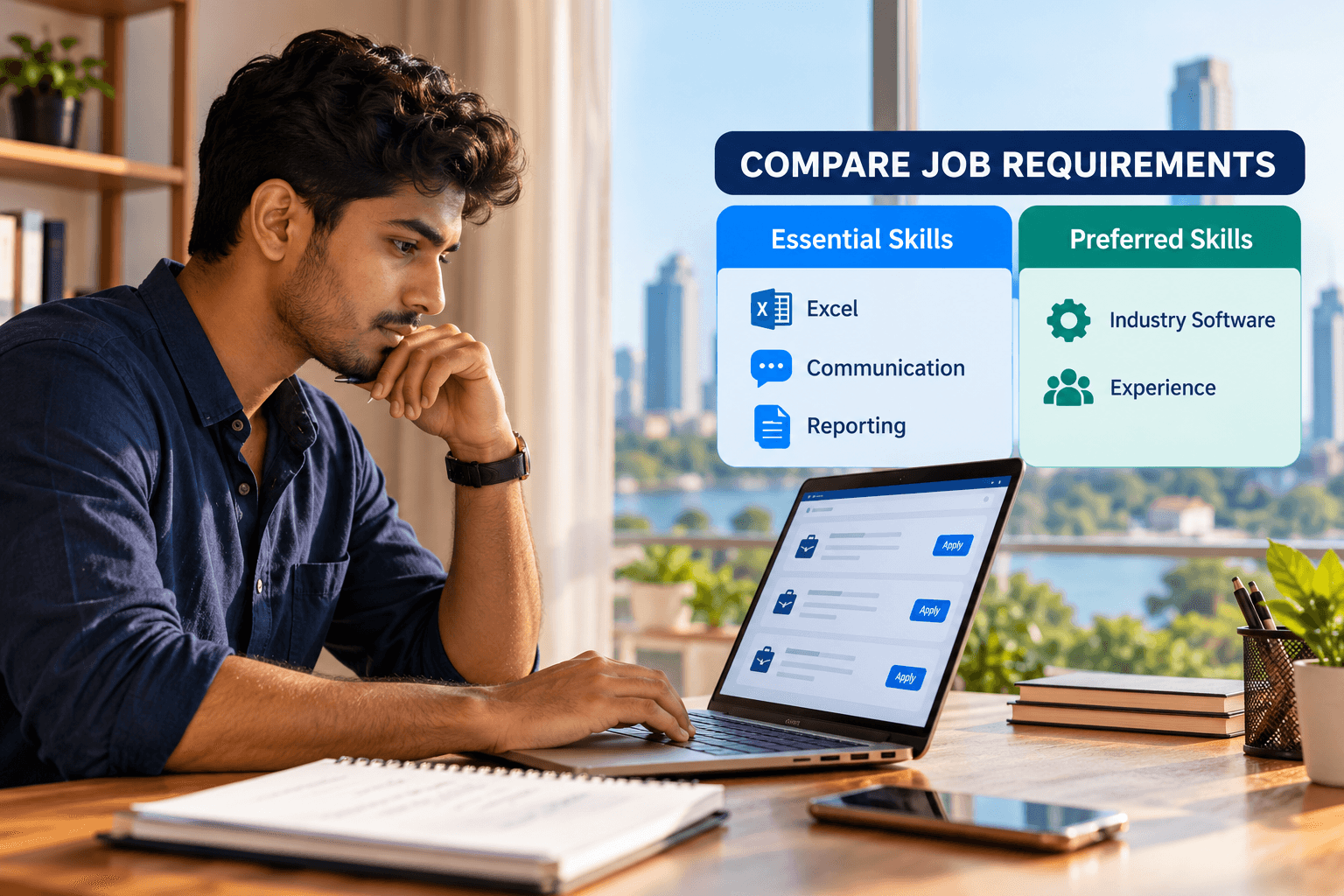
Read several advertisements for the type of job you want. Pay attention to the skills that appear repeatedly, such as Excel, customer communication, report preparation or knowledge of specific software.
Separate essential requirements from preferred qualifications. This helps you understand whether you are ready to apply or should first strengthen a particular skill.
For Sri Lankan applicants, location is another practical consideration. Compare opportunities in Colombo with positions closer to your home. Think about travel time, transport expenses, working hours and any relocation requirements before deciding whether a role suits you.
Develop Skills You Can Demonstrate
Learning becomes more useful when you can show how you apply it.
If you want an accounts assistant role, practise creating an expense tracker or preparing a simple spreadsheet report. If you are interested in digital marketing, create a sample content calendar for a fictional business. If you want to enter software development, build a small application that solves a clear problem.
These projects give you something concrete to discuss in your CV and interviews.
Certificates can support your application, but employers also need to understand what you can do. Choose courses that address a genuine gap in your skills rather than collecting qualifications without a clear purpose.
Gain Experience Before Your Ideal Job
Your first opportunity may not be your ideal position. However, an internship, trainee role, part-time assignment or volunteer project can help you develop useful workplace skills.
For example, helping to organise a university event can teach you about planning, teamwork and communication. Supporting a family business can provide experience in customer service, stock handling or record keeping.
The key is to recognise your contribution and describe it accurately.
Instead of saying, "I helped with an event," explain that you coordinated registrations, maintained participant records or communicated with suppliers.
Be clear about whether the experience came from employment, volunteering or a personal project.
Improve Your Communication Skills
Strong communication helps you explain ideas, understand instructions and work effectively with others.
Practise writing professional emails, introducing yourself clearly and asking questions when you need clarification. Where your target role requires English, focus on explaining your experience in simple, accurate sentences.
Sinhala and Tamil communication skills can also be relevant, depending on the customers, colleagues and communities the role serves. Describe your language proficiency honestly rather than claiming fluency you cannot demonstrate.
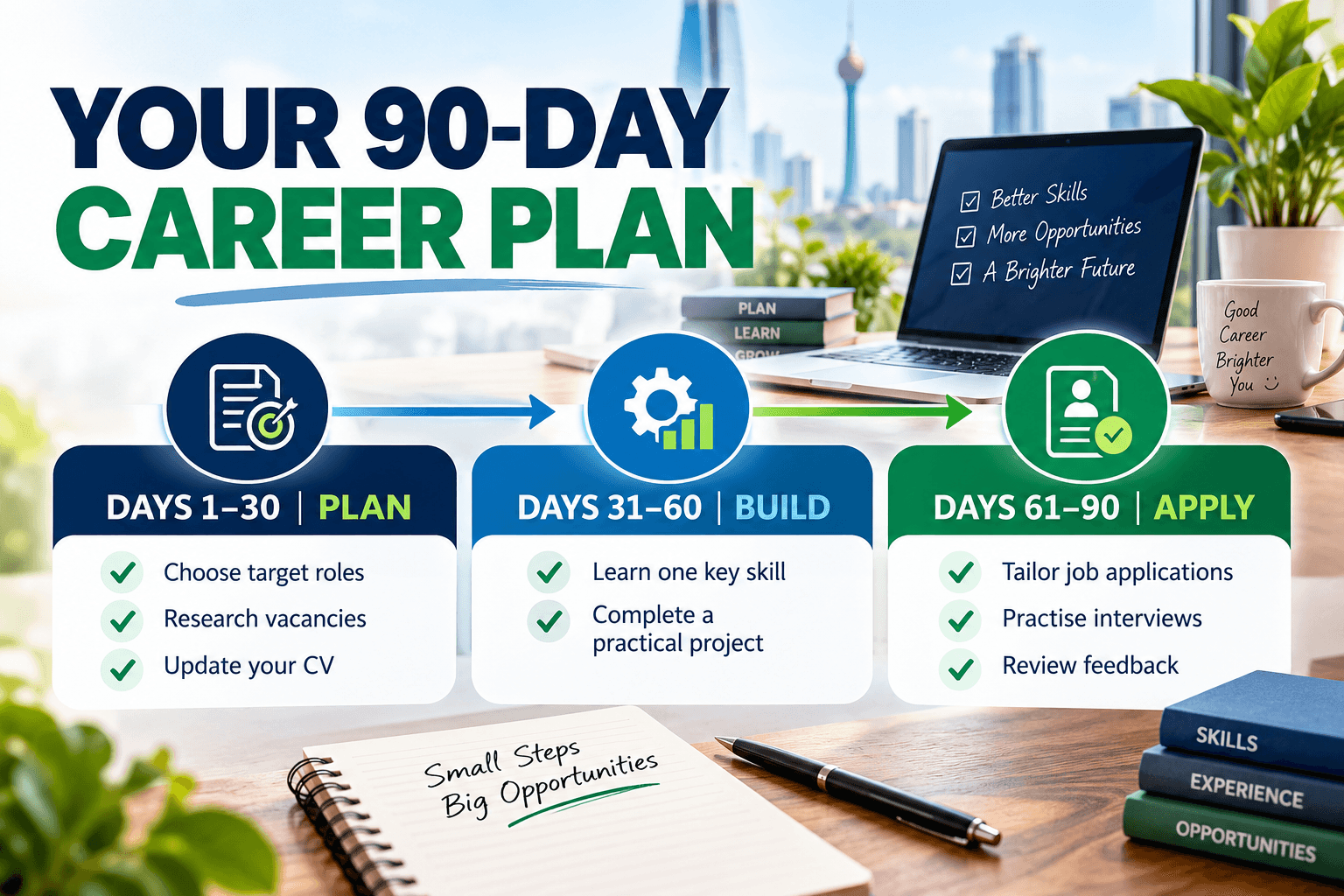
Create a Simple 90-Day Career Plan
A short plan makes career development easier to manage.
During the first 30 days, choose your target roles, review relevant vacancies and update your CV.
During the next 30 days, develop one important skill and complete a small project that demonstrates it.
During the final 30 days, submit tailored applications, practise interview answers and review the responses you receive.
If applications are not leading to interviews, reconsider your CV and the suitability of the roles you are choosing. If you reach interviews but do not progress, work on explaining your experience with clearer examples.
Evaluate Opportunities Beyond the Job Title
When comparing jobs, consider the responsibilities, training, supervision and opportunities to learn.
Ask what you would be expected to achieve during the first few months. Think about whether the role will help you build skills that remain useful in the future.
Salary matters, but so do the working environment, travel requirements and realistic opportunities for development.
Take the Next Step with Jobs360.lk
Career progress begins with a practical action. That could be improving your CV, completing a project or applying for a position that suits your strengths.
Explore jobs on Jobs360.lk, review the requirements and start building a career plan around the opportunities that interest you.
Frequently asked questions
How do I start career development in Sri Lanka?
Start by writing down the tasks you enjoy, the skills you can demonstrate and the areas you want to improve. Then identify one or two career directions and read several job adverts to understand what those roles require.
Are certificates enough to get a job?
Certificates can support your application, but employers also need to understand what you can do. Choose courses that fill a genuine skill gap and complete small projects that demonstrate the skill.
What is a 90-day career plan?
A 90-day career plan splits your goals into three stages: in the first 30 days choose target roles and update your CV, in the next 30 days build one important skill through a project, and in the final 30 days submit tailored applications and practise interviews.
How should I compare two job offers?
Look beyond the job title and salary. Compare the responsibilities, training, supervision, working environment, travel requirements and realistic opportunities to learn and grow.

Written by
Jobs360.lk Editorial Team
Jobs360.lk is an AI-powered recruitment platform connecting job seekers and employers across Sri Lanka. Our team shares practical guidance on job searching, CVs, interviews and career growth.
About Jobs360.lkPut your career plan into action
Explore vacancies that match your strengths and start applying with purpose.
Explore Jobs