Quick answer
To find a job in Sri Lanka, decide on your target role and location, prepare a one- or two-page CV tailored to that role, search vacancies daily on a trusted job portal such as Jobs360.lk, apply within the first few days of a posting, and follow up professionally after every interview.
Key takeaways
- Pick a clear target role and location (for example, Colombo or remote) before you start applying.
- Most private-sector vacancies are now advertised online check a job portal daily and set job alerts.
- Tailor your CV to each vacancy using the exact skills listed in the job advert.
- Apply early: employers in Sri Lanka often shortlist from the first batch of applications.
- Never pay a fee to apply for a job legitimate employers do not charge candidates.
In this article
What does the Sri Lankan job market look like in 2026?
Sri Lanka's job market is concentrated in the Western Province Colombo, Gampaha and Kalutara — with growing opportunities in Kandy, Kurunegala, Galle and Jaffna. Hiring is strongest in a handful of sectors:
- IT and software engineering — software development, QA, DevOps, data and cloud roles, plus a growing number of remote positions for international companies.
- BPO and KPO — customer support, finance and accounting, and back-office operations serving overseas clients.
- Banking, finance and insurance — banking associates, credit officers, accountants and insurance advisors.
- Apparel and manufacturing — merchandising, production planning, quality assurance and supply chain.
- Tourism and hospitality — hotel operations, front office, food and beverage, and travel sales.
- Healthcare and education — nurses, pharmacists, lab technicians, teachers and lecturers.
Knowing which sector you are targeting helps you choose the right keywords, the right CV format and the right employers to follow.
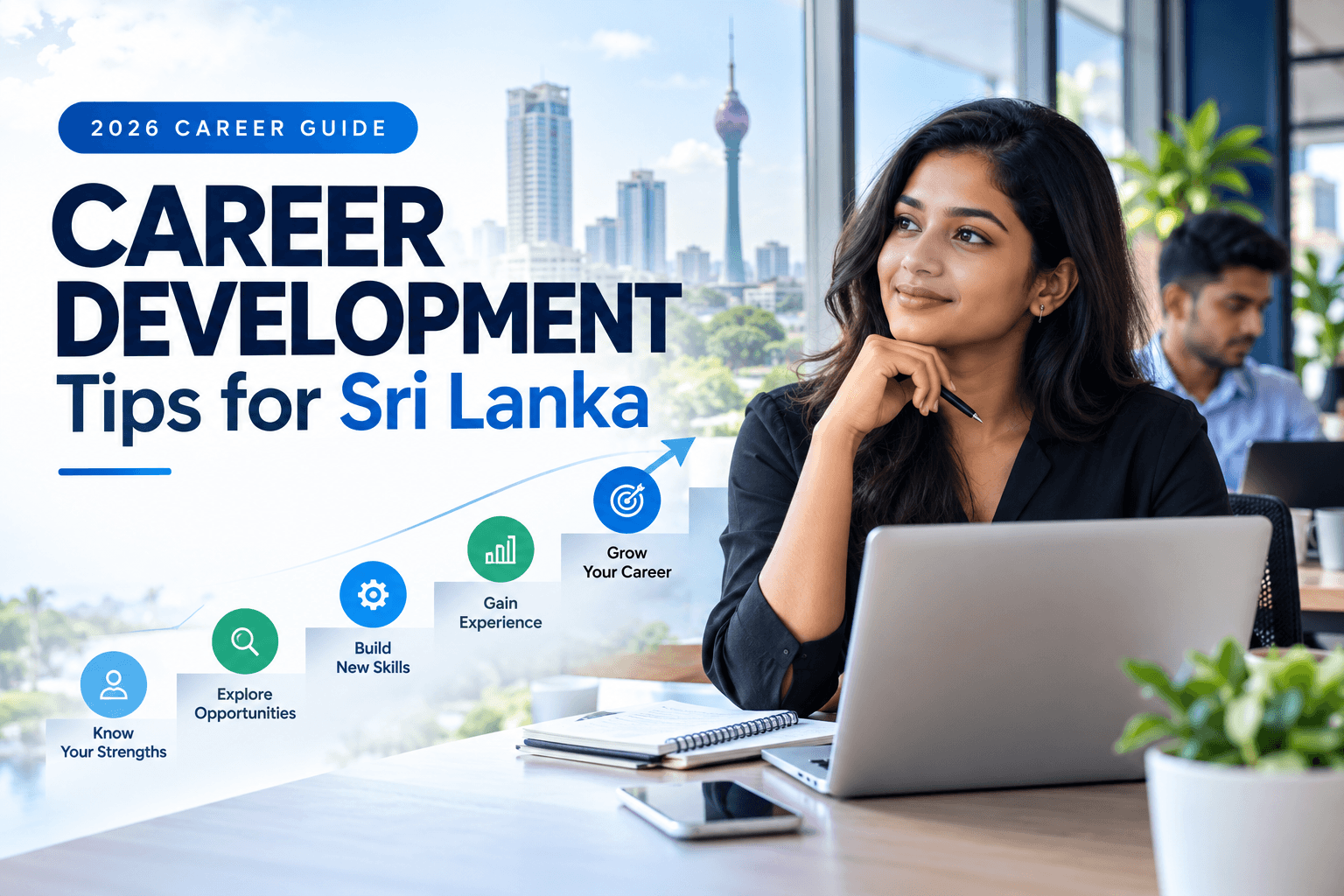
Step 1: Define the role you actually want
Applying to "any job" is the most common reason job seekers in Sri Lanka send hundreds of applications without a single call back. Recruiters screen quickly, and a CV that is not clearly aimed at the vacancy is set aside.
Before you search, write down:
- Two or three job titles you are qualified for (for example, "Accounts Executive", "Junior Accountant", "Accounts Assistant").
- Your preferred locations — a city, a district, or remote/hybrid.
- Your must-haves — minimum salary, working hours, transport or shift requirements.
- Your strongest proof points — qualifications (O/L, A/L, NVQ, diploma, degree, CIMA, AAT, CA), experience and measurable achievements.
These become your search keywords and the backbone of your CV.
Step 2: Prepare a CV that passes a 10-second scan
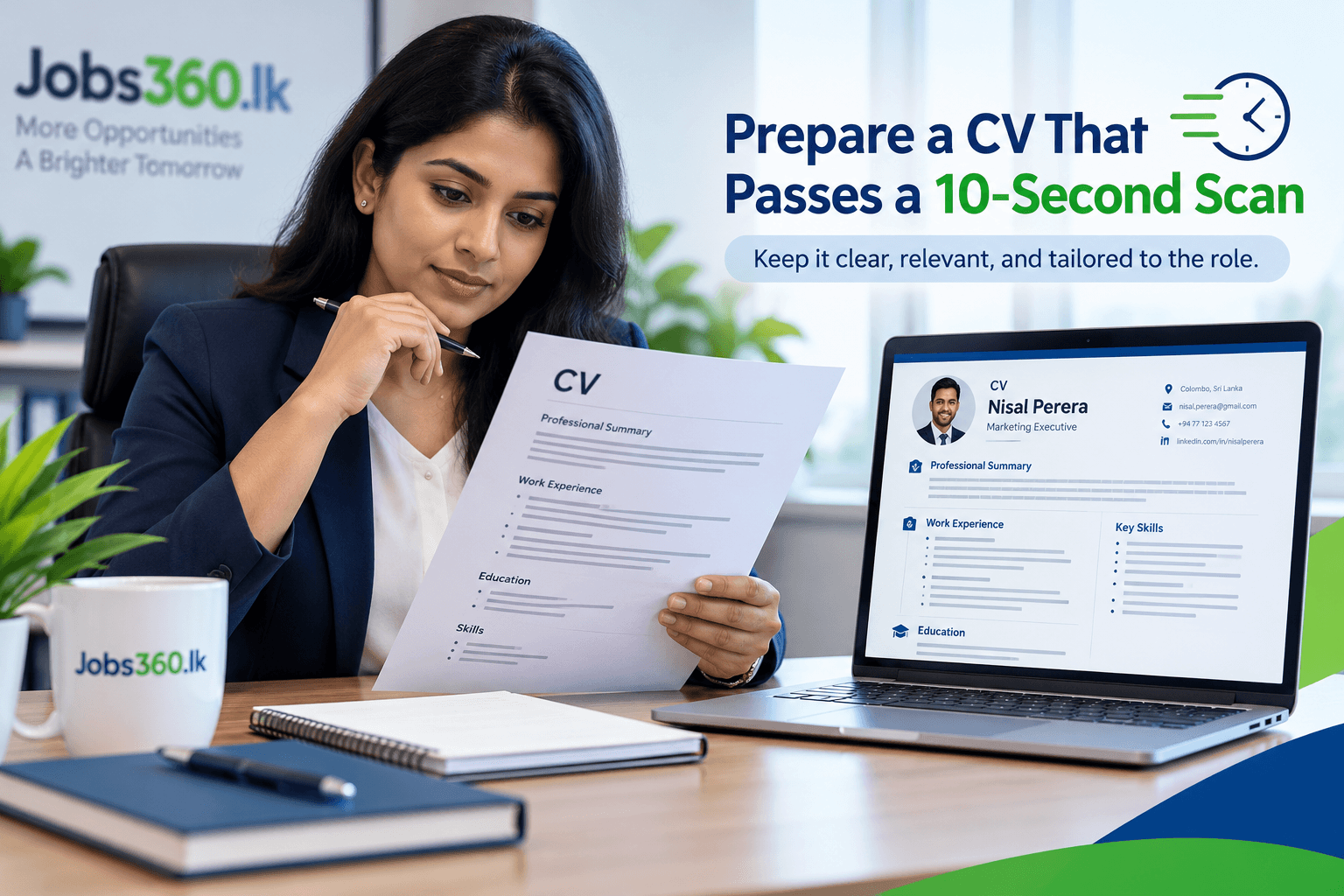
Most recruiters in Sri Lanka decide within seconds whether a CV deserves a closer look. Keep it to one or two pages, put your strongest information at the top, and match the language of the job advert.
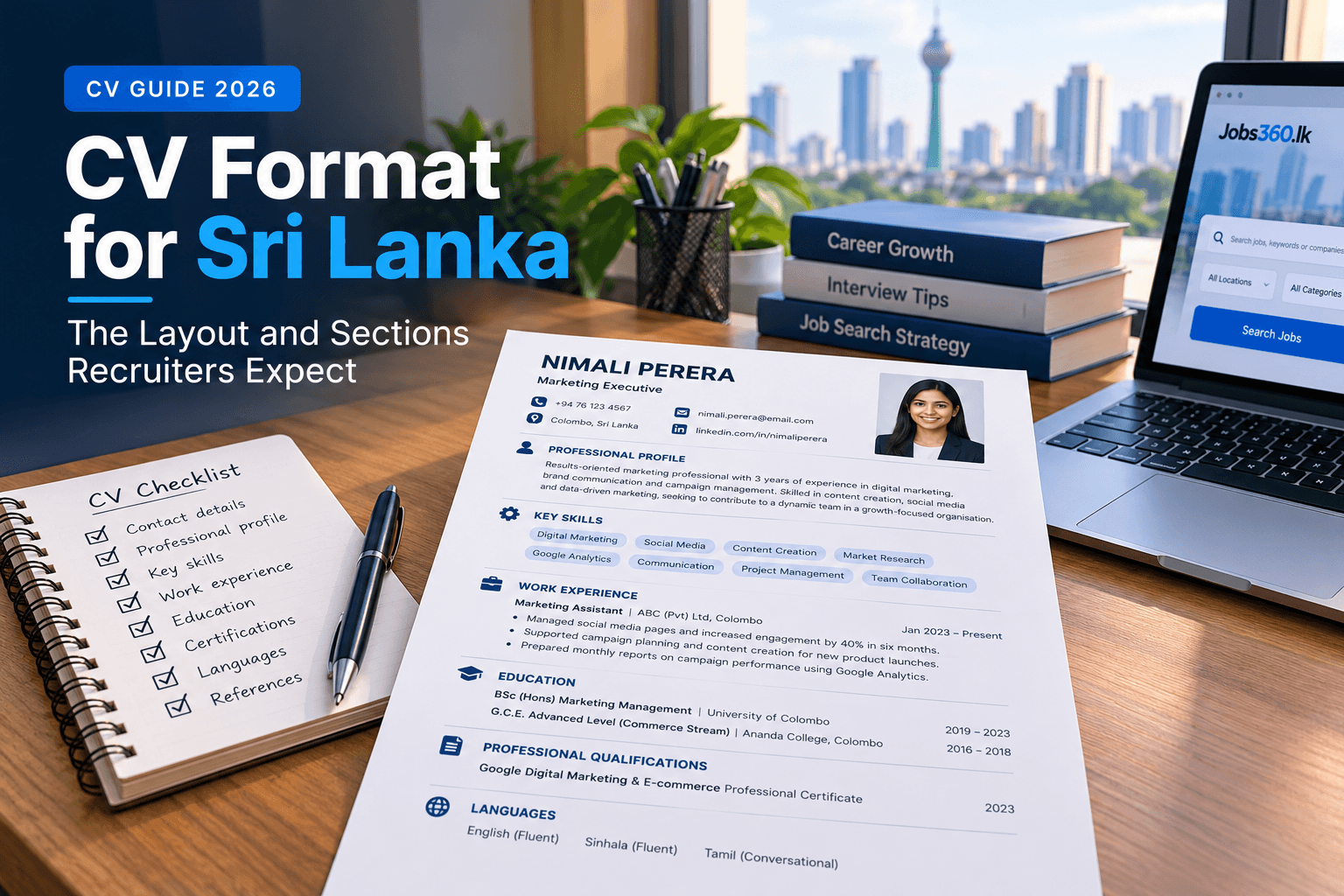
A strong Sri Lankan CV includes a professional profile, key skills, work experience with results, education and professional qualifications, and contact details with a professional email address. You do not need to include your NIC number, religion or a full family background unless the employer specifically requests it.
For a full template and examples, read our guide on the correct CV format for Sri Lanka and our CV writing best practices.
Step 3: Where to search for job vacancies in Sri Lanka
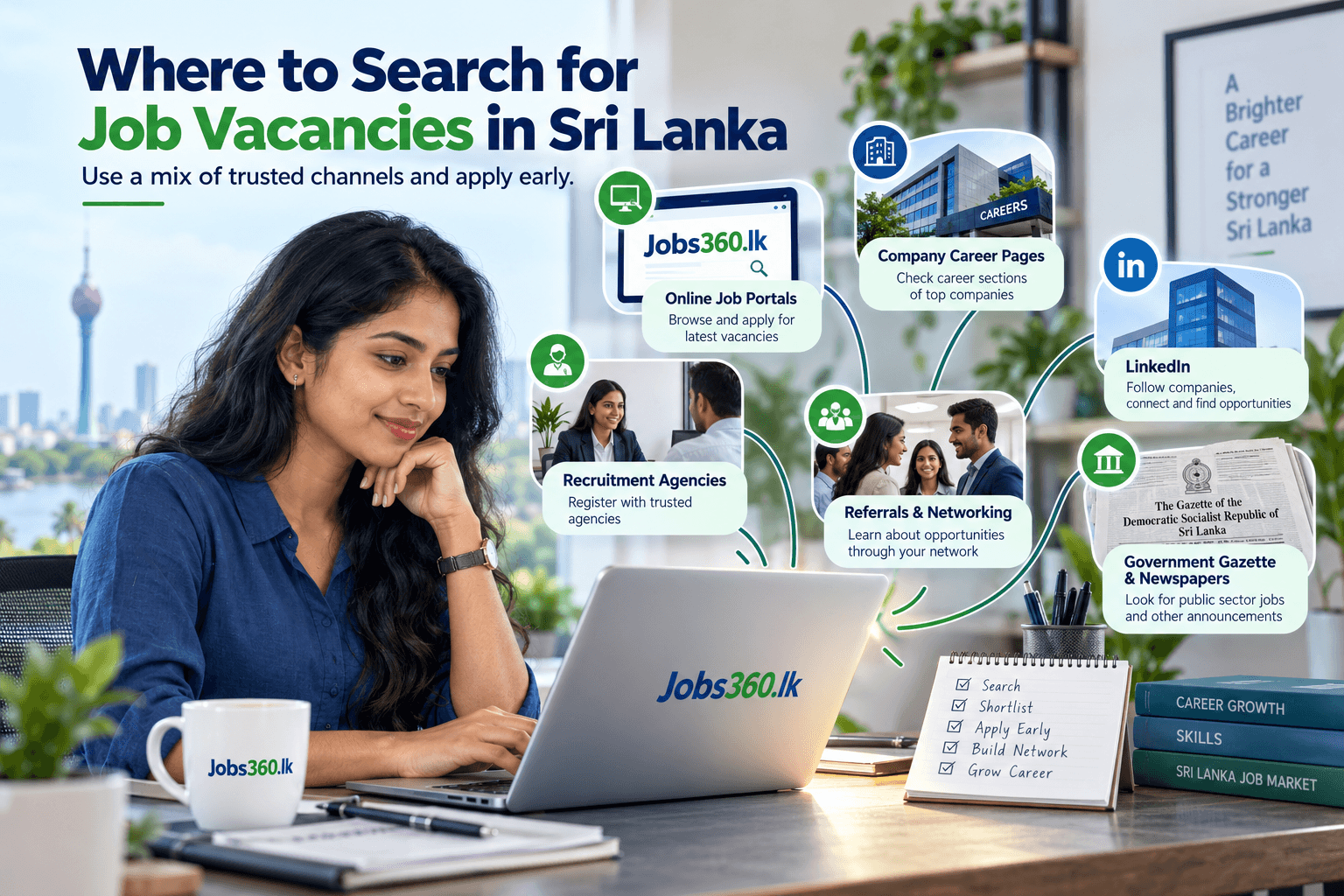
Use a mix of channels rather than relying on one source. Each one reaches a different type of employer.
| Channel | Best for | Tip |
|---|---|---|
| Online job portals (e.g. Jobs360.lk) | Private-sector roles across all industries | Set job alerts so you can apply on the day a vacancy is posted |
| Company career pages | Large banks, telcos, IT and apparel groups | Follow 10–15 target employers and check weekly |
| Corporate, IT and managerial roles | Keep your headline and skills aligned with your CV | |
| Government Gazette & newspapers | Government and semi-government jobs | Read the closing date and application format carefully |
| Recruitment agencies | Mid- to senior-level and specialist roles | Only work with agencies that do not charge candidates |
| Referrals & networking | Roles that are never advertised | Tell former colleagues and lecturers exactly what role you want |
On Jobs360.lk you can browse all latest job vacancies, filter by category and location, and use AI-powered matching to surface the roles that fit your profile. You can also search directly for example, jobs in Colombo.
Step 4: Apply smart, not just often
Quality beats volume. Ten tailored applications usually outperform a hundred generic ones.
- Apply within 48–72 hours of a vacancy going live. Many Sri Lankan employers start shortlisting before the closing date.
- Mirror the job advert. If it asks for "Sage, QuickBooks and VAT returns", make sure those exact words appear in your CV where true.
- Follow the instructions. If the advert asks for a reference number in the email subject or a specific file format, do exactly that.
- Write a short cover message. Three to five sentences explaining why you fit the role is enough.
- Track your applications in a simple spreadsheet: company, role, date applied, contact and status.
Step 5: Prepare for interviews
Interviews in Sri Lanka often include a first-round HR interview, a technical or practical assessment, and a final interview with a department head. Many companies now run the first round online via Zoom, Teams or Google Meet.
Prepare short, specific answers to common questions such as "Tell me about yourself", "Why do you want to join us?" and "What are your salary expectations?". Our guide to common job interview questions and answers in Sri Lanka covers the questions you are most likely to face.
Step 6: Evaluate the job offer properly
When you receive an offer, look beyond the basic salary. Check:
- EPF and ETF — in the private sector the employer contributes 12% and the employee 8% of earnings to EPF, and the employer contributes 3% to ETF. Confirm the company is registered.
- Allowances — transport, meal, attendance, mobile and performance bonuses.
- Probation period and confirmation terms.
- Working hours, shifts and leave entitlement.
- Notice period and any bond or training agreement.
Always ask for the offer in writing before resigning from your current role.
How do you avoid job scams in Sri Lanka?
Fake vacancies especially "foreign jobs" and "online data entry" offers are common. Protect yourself with these rules:
- Never pay to apply, train, or "reserve" a job. Legitimate employers do not charge candidates.
- For overseas jobs, deal only with agencies licensed by the Sri Lanka Bureau of Foreign Employment (SLBFE), and verify the licence before sharing documents.
- Be wary of offers that skip the interview or promise unusually high pay for little work.
- Do not share your NIC, passport or bank details until you have a written offer from a verified company.
Read more in our guide to legitimate online jobs in Sri Lanka.
Frequently asked questions
What is the fastest way to find a job in Sri Lanka?
The fastest way is to target a specific role, set job alerts on a Sri Lankan job portal such as Jobs360.lk, and apply within 48–72 hours of each relevant posting with a CV tailored to that vacancy. Referrals from your network can also shorten the process significantly.
Which are the best job sites in Sri Lanka?
Use a combination of a dedicated Sri Lankan job portal like Jobs360.lk, company career pages, LinkedIn for corporate and IT roles, and the Government Gazette for state-sector vacancies.
Can I find a job in Sri Lanka without experience?
Yes. Trainee, internship, management trainee, customer service and sales roles regularly hire candidates without experience. Highlight your education, internships, projects, volunteering and soft skills on your CV.
Is it free to apply for jobs on Jobs360.lk?
Yes. Job seekers can browse and apply for vacancies on Jobs360.lk free of charge. You should never pay a fee to apply for any job.
How long does it take to get a job in Sri Lanka?
It varies by industry and experience, but most hiring processes take two to six weeks from application to offer. Applying consistently and following up politely helps you move faster.

Written by
Jobs360.lk Editorial Team
Jobs360.lk is an AI-powered recruitment platform connecting job seekers and employers across Sri Lanka. Our team shares practical guidance on job searching, CVs, interviews and career growth.
About Jobs360.lkReady to start your job search?
Browse the latest job vacancies in Sri Lanka and let AI match you with the right roles.
Browse Jobs